


Organic farming has become an increasingly important topic in agriculture. Alongside requirements for the protection of natural resources, the involvement of smallholder farmers plays an important role in the long-term development of agricultural value chains.
Since its foundation, LIMBUA has been working with more than 9,000 organically certified contract smallholder farmers in Kenya. Through regular training, we support farmers in developing their knowledge, implementing organic farming practices and meeting the requirements of internationally recognised certification standards.
What does the programme look like?
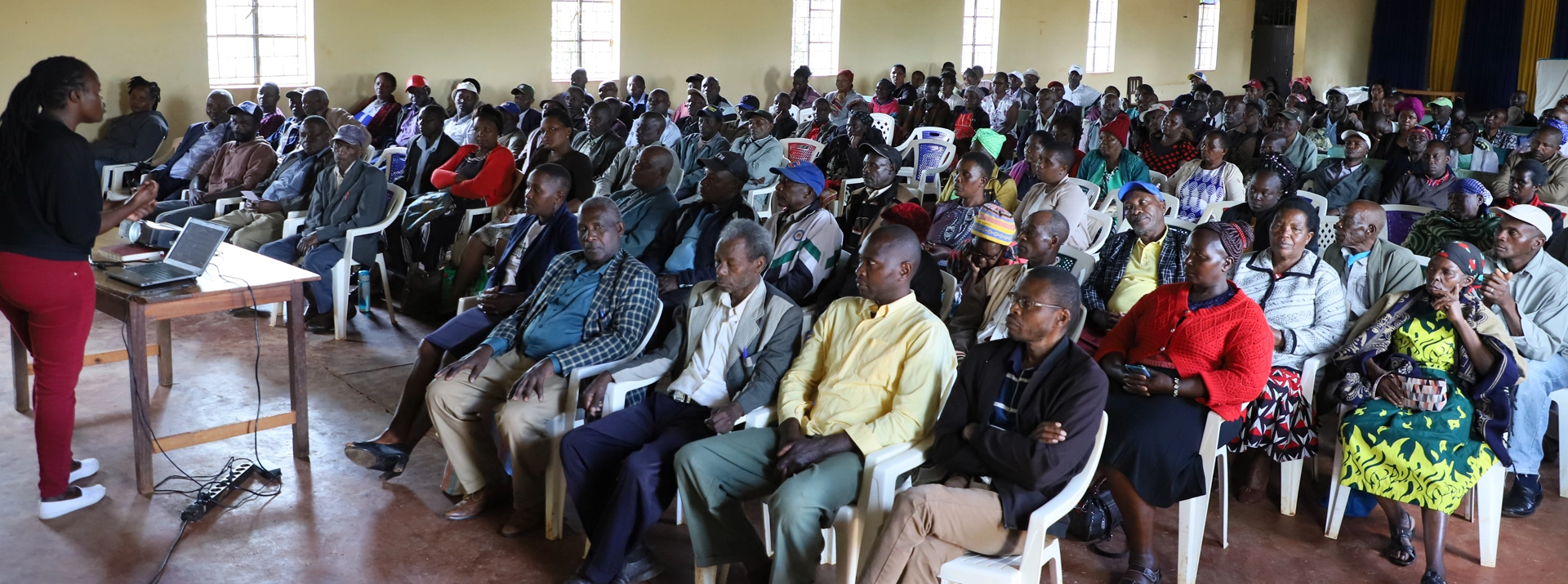
Each year, all of LIMBUA’s contract smallholder farmers take part in regular training sessions and workshops held across rural Kenya. Farmers gain practical knowledge about organic farming methods and the agricultural inputs permitted under the respective certification standards. They also learn about measures that can support soil fertility and how to prepare for external inspections and certification audits.
Our training sessions provide both theoretical knowledge and practical guidance, enabling farmers to implement organic farming principles and the requirements of the applicable organic standards on their farms.
We also provide a digital platform that enables farmers to connect with one another and with the LIMBUA field team. This supports knowledge sharing and facilitates cooperation within the network. Through our cooperation with local banks, farmers also gain access to financial literacy training and information about financing options.
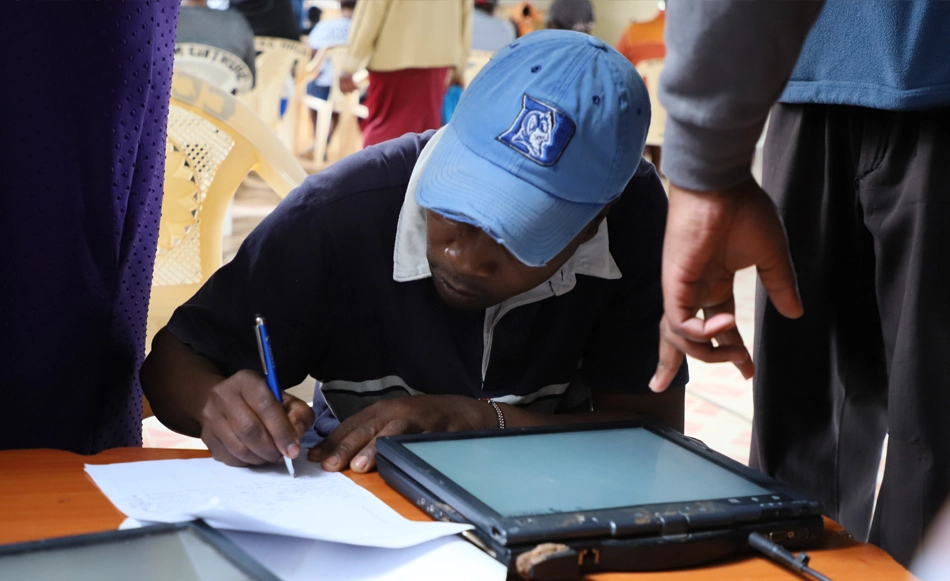
Digital registration by fingerprint scan
What does the training involve?
The LIMBUA field team regularly visits the farms of contract smallholder farmers and organises training sessions attended by around 250 participants each. LIMBUA provides the training facilities, meals and refreshments, as well as a travel allowance for participants. Upon completion, participants receive a certificate of attendance.
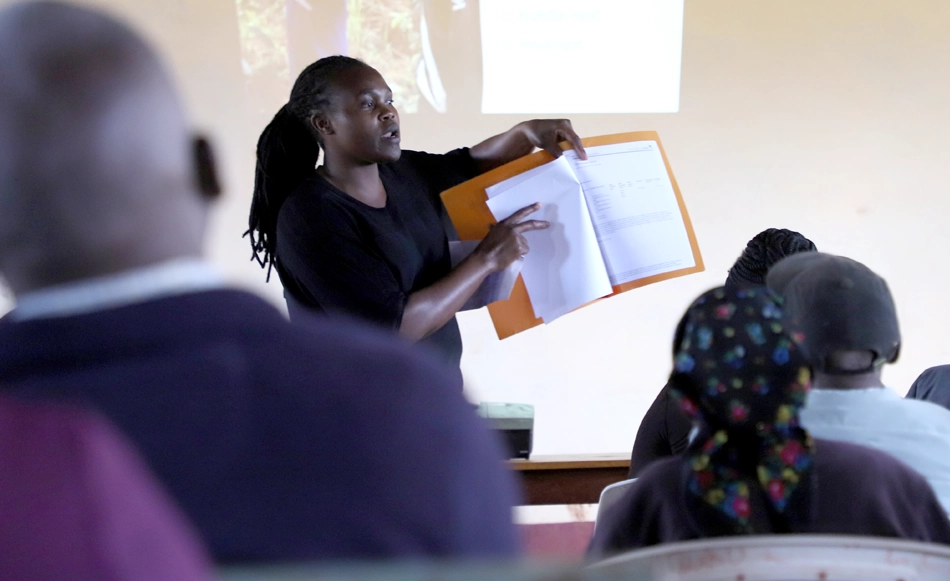
Field Manager Mary Muli during a training session
Why are we doing this?
As a social enterprise, LIMBUA’s focus extends beyond generating profits. Our aim is to build value chains that include smallholder farmers, traders, processors and customers. Defined working conditions, transparent purchasing processes and long-term partnerships are important elements of this approach. To achieve these goals, continuous training for farmers at the beginning of the value chain is essential.
Through these training programmes, LIMBUA supports farmers in implementing organic farming practices and meeting the requirements of internationally recognised certification standards. Rather than searching for existing suppliers, LIMBUA works directly with farmers and supports them through regular training and advisory services. Farmers’ feedback also helps us continuously improve our training programmes.
Today, LIMBUA works with more than 9,000 contract smallholder farmers and purchases their harvests directly. Their organically certified macadamias, avocados and mangoes are processed at LIMBUA’s own production facilities. Depending on the product and supply chain, the applicable requirements include certifications such as EU Organic, Fair for Life, Naturland, Demeter, Bio Suisse, Rainforest Alliance and Regenerative Organic Certified (ROC).


