


LIMBUA is the world’s first macadamia producer with ROC™ certification
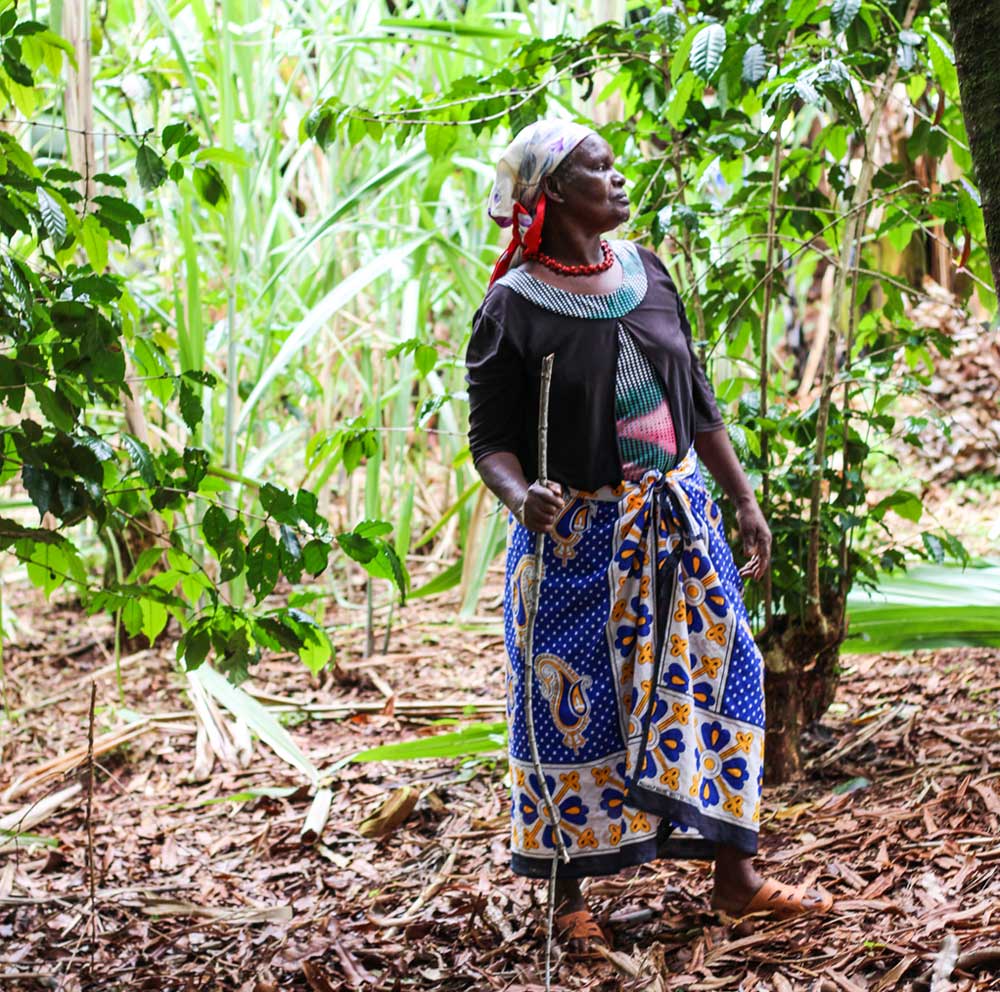
LIMBUA macadamia smallholder farmer on her organic mixed farm
Requirements of ROC™ certification
Regenerative organic agriculture aims to maintain soil structure, support diverse farming systems and strengthen agricultural cycles. ROC™ certification combines corresponding environmental requirements with criteria for animal welfare and working conditions.
The certification uses the USDA Certified Organic standard or a recognized equivalent organic standard as its baseline. It adds criteria covering the three pillars of regenerative organic agriculture:
- Soil health and land management: Requirements for agricultural practices relating to soil structure, the development of soil organic matter and the management of agricultural land.
- Animal welfare: Defined requirements for the keeping, care and treatment of animals on farms.
- Labour and social standards: Criteria relating to remuneration, occupational safety, working conditions and the rights of agricultural workers.
Macadamia smallholder farmer on an organic mixed farm with a LIMBUA employee
Soil management as part of the ROC™ standard
ROC™ certification supplements existing organic farming requirements with additional criteria for soil management and the development of soil organic matter.
Agricultural soils perform important functions in food production, water retention and the supply of nutrients to plants. Practices such as agroforestry, minimal soil disturbance, vegetative ground cover and the use of organic materials can help maintain soil structure and make farms more resilient to changing climatic conditions.
Regenerative organic agriculture, as promoted by ROC™ certification, includes practices such as:

- Soil management and vegetative cover:
Minimizing soil disturbance caused by agricultural equipment can reduce the risk of erosion and the loss of soil organic matter.
Covering the land with living vegetation, crop residues or mulch adds organic material to the soil and can help protect it from erosion while contributing to weed and pest management.

- Diversity and crop rotation:
Growing different plant species and rotating crops support diverse farming systems and can help manage crop-specific pests and diseases.

- Composting and soil analysis:
Compost adds organic material and nutrients to the soil. The ROC™ standard also includes requirements for regular soil analysis. The results provide information about nutrient levels and can be considered when preparing and applying compost.
LIMBUA contract smallholder farmers receive organic compost made from organic residues generated during LIMBUA production. Since 2022, more than 200 tonnes of compost have been distributed to LIMBUA contract smallholder farmers and schools for their organic school gardens. (Information as of January 2024)
- Animal integration:
Animals are part of many mixed farming systems. Their manure can be used within farm cycles as a raw material for organic fertilizer.

- Requirements for agricultural inputs:
The underlying organic standard regulates which fertilizers and plant protection products may be used. Organic mixed farms use compost, diverse planting systems and other methods permitted under organic farming standards.
These measures aim to maintain soil structure, support diverse farming systems and strengthen agricultural cycles within the farms.
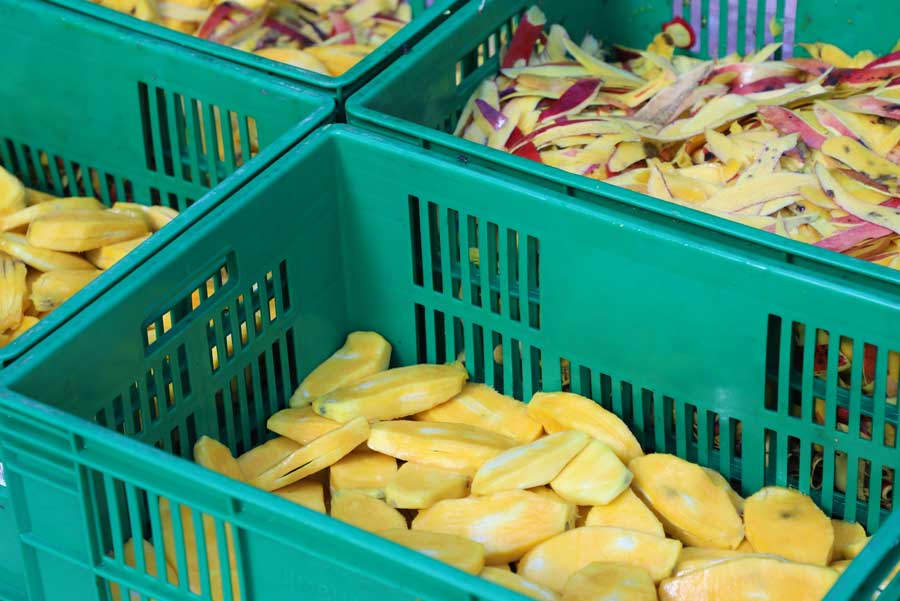
Mango residues from LIMBUA production used for compost production
Labour and social standards
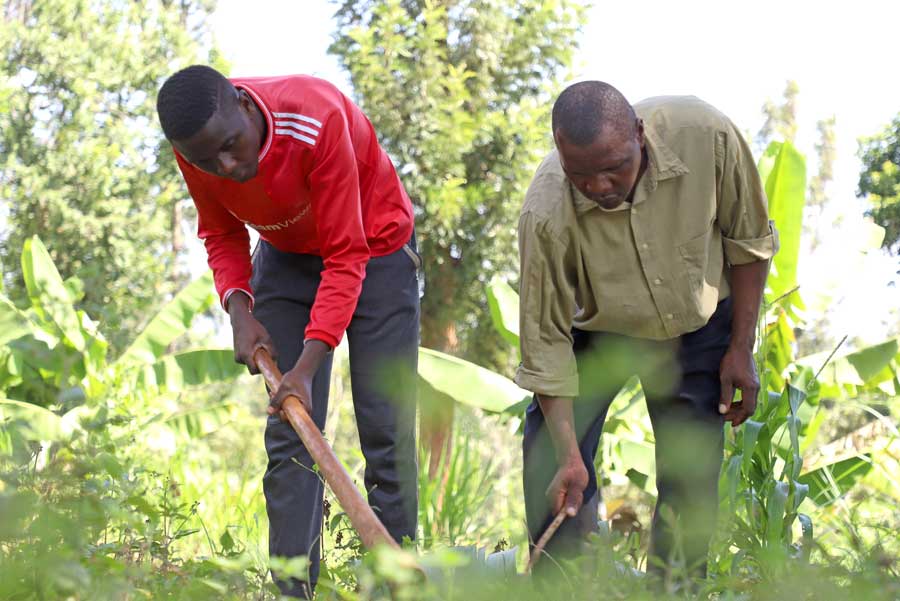
As LIMBUA has worked with organically managed mixed farms from the beginning, many of the existing agricultural structures could be used as a basis for ROC™ certification. Operational processes and documentation requirements were also adapted to meet the requirements of the standard.
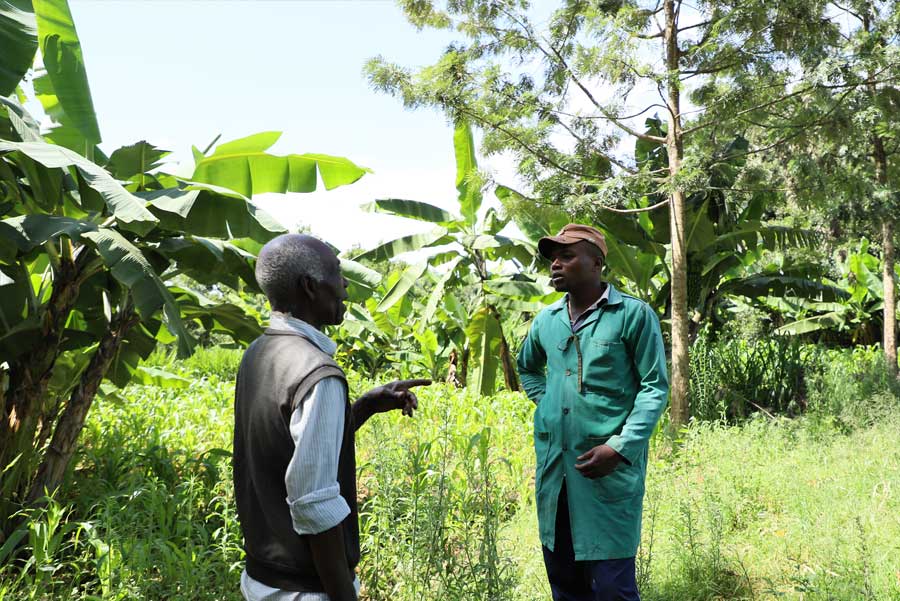
Smallholder farmer speaking with a LIMBUA employee
Information for certified products
The Regenerative Organic Certified® label identifies products whose certified supply chain meets the applicable requirements of the ROC™ standard. The certification covers criteria relating to soil health and land management, animal welfare, and labour and social standards.


