


Composting plays an important role in organic farming. During the process, organic residues are converted into compost, which adds organic matter and nutrients to the soil. Here we explain how composting works at LIMBUA and which materials are used.
Compost is used as an organic soil amendment on the organic mixed farms of LIMBUA contract smallholder farmers. Schools supported by LIMBUA FOUNDATION also receive compost for their organic school gardens and other agricultural activities.
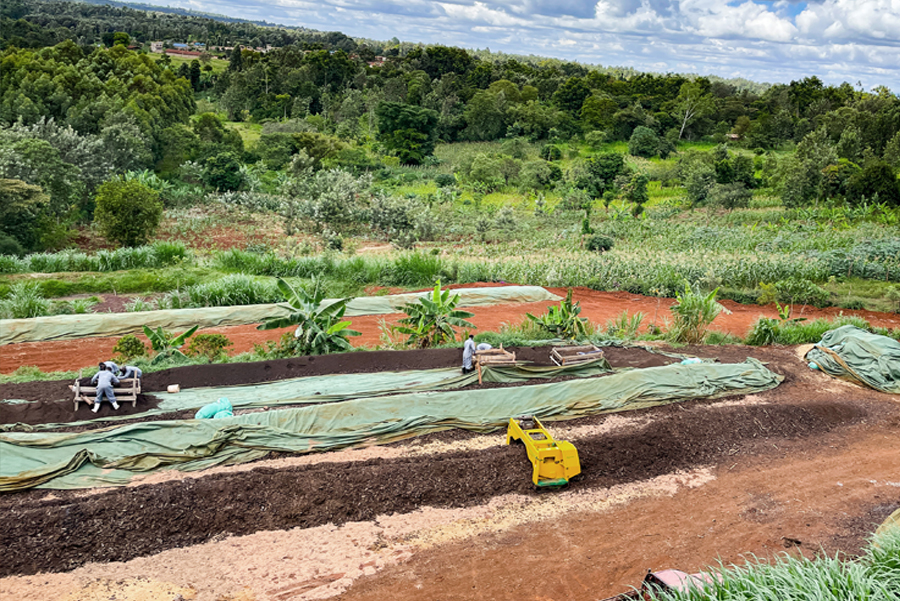
LIMBUA organic compost at the production site in Ena
The entire process takes around three months. The final product is called “ROTUBA TOSHA”, which translates as “enough fertility”, and was introduced in 2021. Documentation is available for its use on the relevant certified farms, including the applicable KEBS, ECOCERT and NOP requirements.
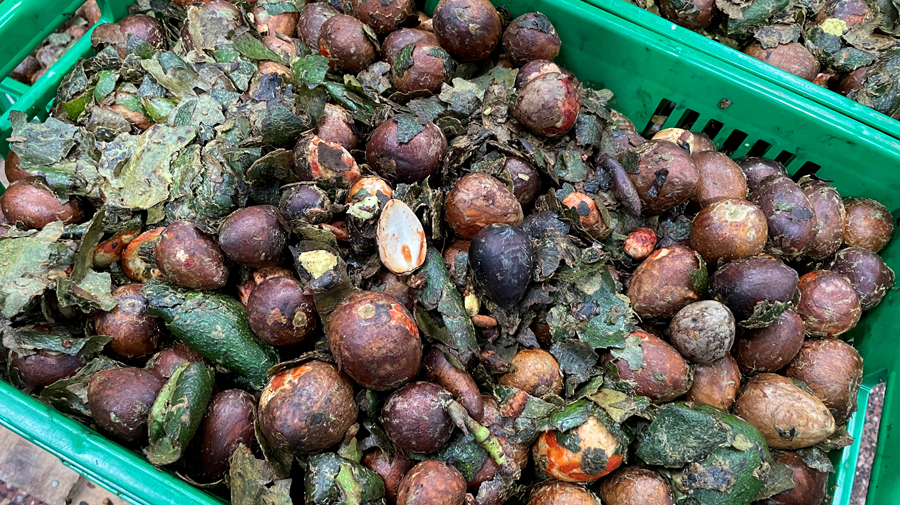
Organic residues from LIMBUA production
Functions of compost in organic farming
- Supplying organic matter and nutrients: Compost adds organic matter and plant nutrients to the soil. Its exact composition depends on the materials used and the composting process.
- Supporting soil structure and water retention: Organic matter can support soil structure and its capacity to retain water. The effect depends on factors such as the soil type, the amount of compost applied and the method of application.
- An input for organic farming: Compost can be used as an organic soil amendment in accordance with the applicable organic standards. This allows organic materials available on the farms to be incorporated into agricultural cycles.
- Use of production residues: Organic residues from LIMBUA production are used as raw materials for compost production.
- Soil protection: Improved soil structure and sufficient ground cover can help reduce the risk of soil erosion.
- Supporting soil organisms: Mature compost contains organic matter that can provide a source of food for various soil organisms.
- Supplementing the nutrient supply: The use of compost can reduce the need for additional fertilisers. Any further inputs required depend on the nutrient needs of the crops and the condition of the soil.
- Possible substitute for peat-based materials: Depending on the application, compost can be used as a component of growing media and may reduce the amount of peat required.
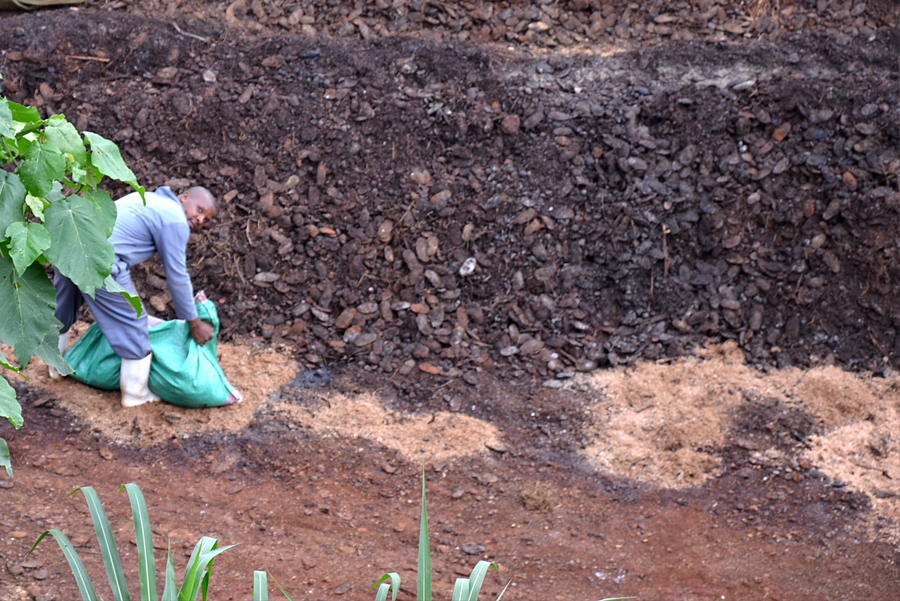
LIMBUA employees working on compost production
Composting with technical support
Regular turning is an important part of the composting process. It loosens the material and supplies it with oxygen. At the same time, the different raw materials are mixed and moisture and heat are distributed throughout the windrow.
Monitoring temperature, moisture and oxygen supply supports the biological breakdown of the organic materials. Smaller quantities of compost can be turned with shovels. For larger quantities, LIMBUA uses a dedicated compost turner.
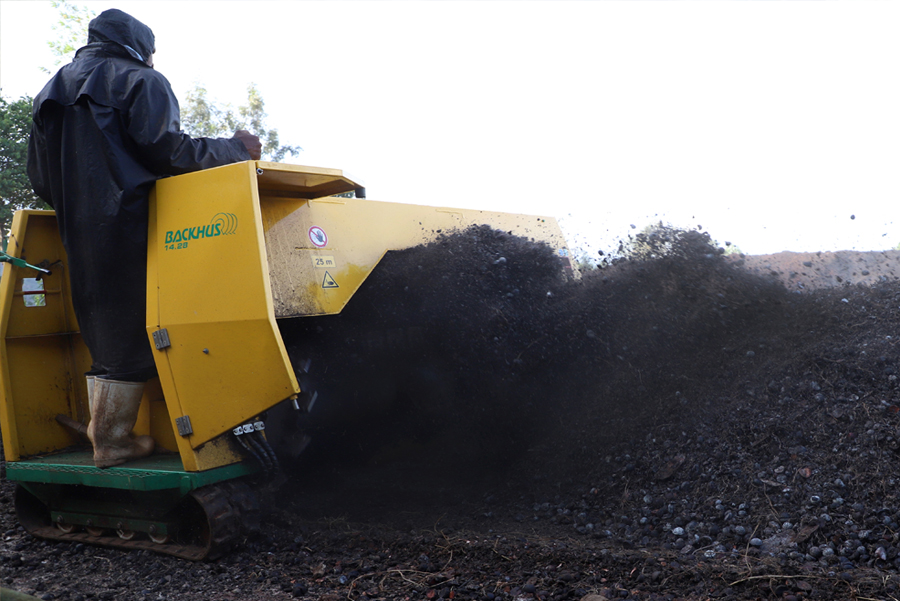
The compost turner working on a compost windrow
Microorganisms in organic compost
Bacteria, fungi and other organisms
Bacteria and fungi decompose plant residues and gradually transform their components. This process generates heat, water and gases. Regular turning supplies the material with the oxygen required for aerobic decomposition.
Microorganisms perform several functions during this process:
- Decomposition of organic materials: Microorganisms break down organic residues. During this process, components are transformed and nutrients are converted into forms that may gradually become available after the compost is applied.
- Heat generation: Biological decomposition generates heat. Regular temperature monitoring helps track the progress of the composting process.
- Formation of mature compost: The breakdown and transformation of the raw materials produce compost that adds organic matter and nutrients to the soil.
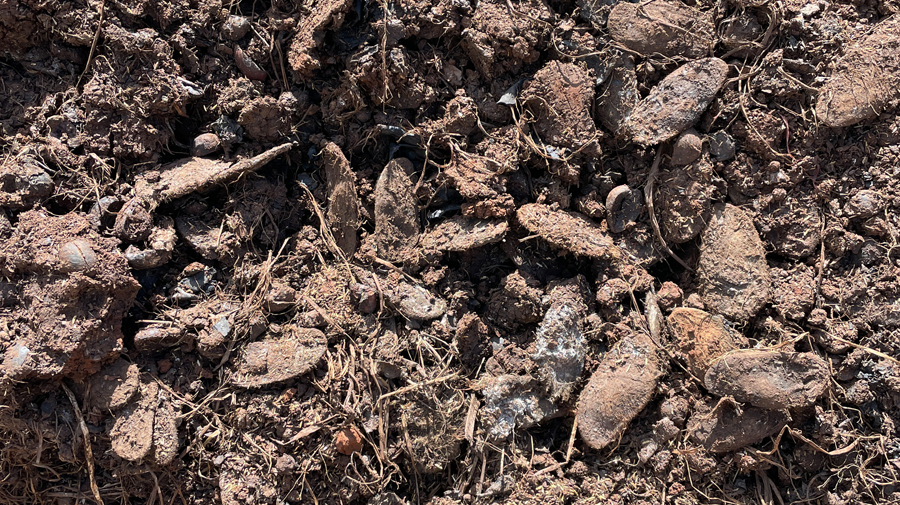
Mango stones during the composting process
Conclusion
Organic compost is an input used in the organic management of mixed farms. It adds organic matter and nutrients to the soil and allows organic residues from LIMBUA production to be reused within agricultural cycles.
Contract smallholder farmers and participating schools receive the compost produced by LIMBUA for use on their organic mixed farms and in their organic school gardens.


