


With a total of eight international organic and social standards, LIMBUA is one of the extensively certified organic producers. These include EU Organic and USDA Organic, Naturland, Bio Suisse, Demeter, Regenerative Organic Certified (ROC), Fair for Life and Rainforest Alliance.
Five external auditors from the certification bodies spend around 12 months per year combined inspecting the LIMBUA facilities and our farmer network. Each auditor’s inspection phase extends over a period of up to three months. The audits focus on how the requirements are implemented in practice on the farms and in production. International certifications mean far more than complying with individual requirements on paper.
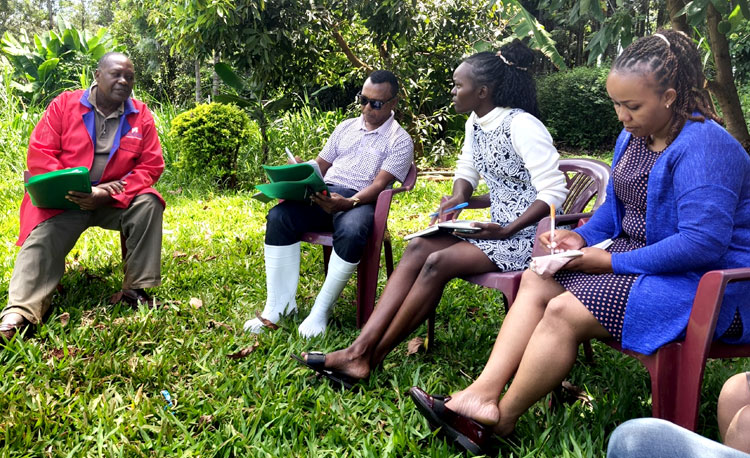
External auditors review the practical implementation of certification requirements within the LIMBUA farmer network
Each certification has its own criteria: While EU Organic and USDA Organic mainly define the foundations of organic farming, other certifications go further and place additional emphasis on topics such as soil health and biodiversity.
Fair for Life focuses particularly on social standards along the entire supply chain and reviews topics such as working conditions and the rights of all stakeholders. It is a complex system of requirements that entire teams at LIMBUA work on every day.
Why large networks are organised differently today
With the current EU regulations, the general requirements for large networks with thousands of stakeholders have been defined much more clearly. From the perspective of EU Organic certification bodies, such structures are considered difficult to monitor if all processes are managed through one central system.
For this reason, LIMBUA’s network of contracted smallholder farmers has been divided into regional groups with their own representation. The EU requires traceable responsibilities: large networks must be able to document who makes decisions and how potential conflicts of interest are avoided. At the same time, control systems should operate independently and not be managed by the same individuals.
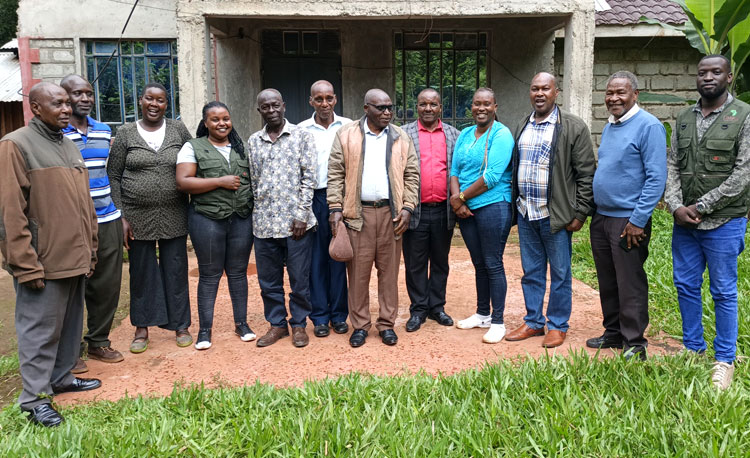
Independently elected smallholder farmer representatives of a regional farmer group with LIMBUA Agrar Team members
Each of our farmer groups therefore has fixed contact persons and defined responsibilities in the form of independently elected smallholder farmer representatives from the respective district. These group representatives help coordinate communication between farmers and LIMBUA. Such local representation structures play an important role, especially for social standards such as Fair for Life.
The control system behind the certifications
A key element of large farmer networks is the so-called Internal Control System – or ICS. Without such internal control systems, certifications of this scale and complexity would not be possible.
The key to this is our LIMBUA Field Team: a team of university-trained agronomists who act as the link between thousands of smallholder farmers and LIMBUA. Team members support the farmers in their everyday work. They conduct trainings and assist with questions related to organic farming and certification requirements.
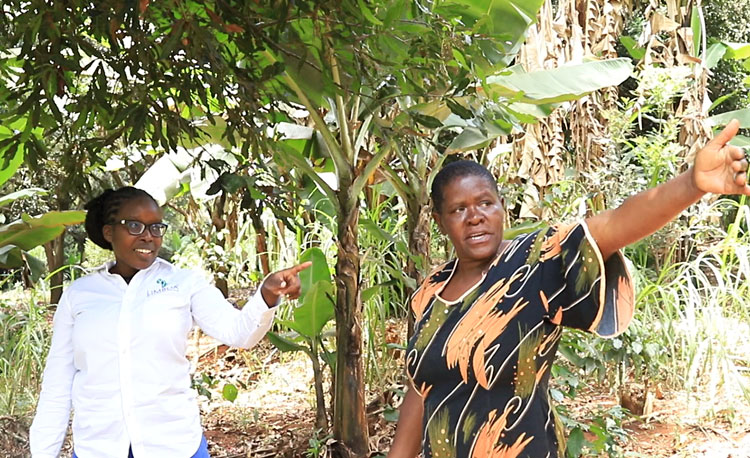
LIMBUA Field Officers inspect smallholder farmers according to certification requirements using a rotation system
Each farmer group is assigned a dedicated Field Team. LIMBUA Field Officers carry out the internal inspections on the farms. To ensure independence, LIMBUA works with a rotation system: inspections are intentionally conducted by staff members who are not responsible for the same region in an advisory role. Topics reviewed include storage practices, animal welfare and compliance with standards for workers on the farms. The ICS Officers then review the results of the internal audits — checking whether everything has been correctly recorded and documented and whether any corrective measures need to be taken.
The role of external auditors
For several months, external auditors from the certification bodies are reviewing processes within LIMBUA. They are not only visiting the production facilities, but also several hundred farms within the smallholder network. Currently, at least 500 farmers are being directly inspected by the external auditors.
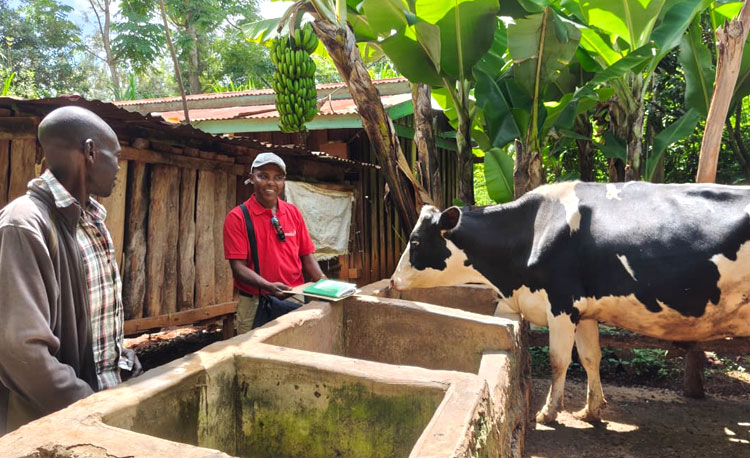
On the farms, auditors also review animal welfare
The independence of the auditors plays a central role in these inspections. Audits are carried out based on international standards such as EU Organic and USDA Organic, as well as additional certifications including Naturland and Rainforest Alliance. Each of these certifications brings its own requirements and additional focus areas. Auditors particularly verify whether our Internal Control System works reliably and whether the rules of the different standards are consistently implemented.
On the farms, auditors look at the cultivation areas and speak directly with smallholder farmers. These interviews are an important part of the inspections: auditors ask, for example, about farming methods and the farmers’ knowledge of organic requirements. The traceability of harvests, plant health and the protection of natural water sources and areas are also reviewed.
Social topics also play a role. As part of standards such as Fair for Life, additional interviews are conducted with farmers and employees in order to understand working conditions and grievance mechanisms within the network and the operations.
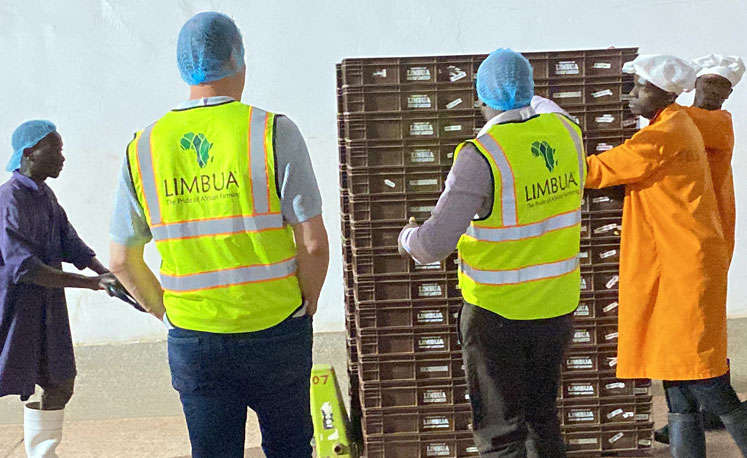
At the production facilities, auditors review product flows and traceability, among other topics
At the production facilities, auditors review processing steps, product flows and the traceability of macadamia, avocado and mango processing throughout the entire production process. For example, they check whether certified goods are processed separately and whether all processes are documented in a traceable way.
Example: Compost as part of the audits
Especially in biodynamic and regenerative agriculture, such as Demeter and Regenerative Organic Certification (ROC), living soil is considered an important foundation for stable long-term farming systems. For this reason, composting and soil management are part of everyday farm work for LIMBUA smallholder farmers.
In our internal organic farmer trainings and through direct support from the LIMBUA Field Teams, smallholder farmers learn how compost is produced on their own farms. Plant residues and organic material from agriculture are used to strengthen natural nutrient cycles on the farms.
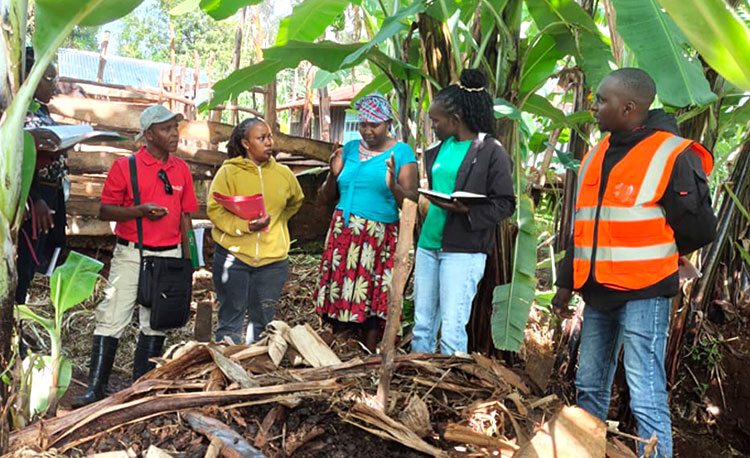
Composting and soil management are audited in biodynamic and regenerative agriculture
Well-prepared compost supports water retention and promotes soil life. At the same time, it helps reduce soil erosion. Especially in regions with intense sunlight and irregular rainy seasons, healthy soils play an important role in the resilience of agricultural land – also with regard to climate change.
During the external audits, composting is therefore one of the topics reviewed on the farms. Auditors look, among other things, at how compost is stored and which materials are used. Especially in biodynamic agriculture, the focus is on the long-term development of functioning natural cycles on the farms.
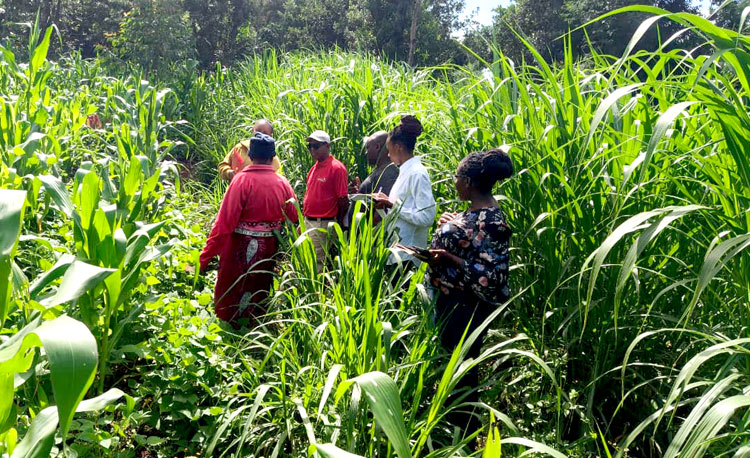
Farm visit and inspection of cultivation areas
Many certifications require organizational and financial effort
What later appears as a seal on a package represents the daily work of LIMBUA teams and months of inspections by certification bodies.
The audits demonstrate how much organization and work go into international certifications. LIMBUA also covers the certification costs for several thousand farmers within our network.
Whether organic or social standards — the requirements accompany our smallholder farmers as well as LIMBUA employees throughout the entire year. The actual external audit period is only one part of a much larger process that continues every day on the farms and within the production facilities.


