


Interview on the LIMBUA Company Profile
The LIMBUA company profile was recognized by the German Journalism Academy (DJA). The profile was written by Manuel Maurer, founder of the online journalism magazine STB Web. We spoke with him about his career in journalism, his motivation, and his impressions of LIMBUA.

Manuel Maurer on digitalization and agricultural supply chains
Mr. Maurer, how did you get into journalism – and why did you choose to study at the German Journalism Academy?
M. Maurer: "I originally studied business administration. After successfully participating in a start-up competition, I founded my company STB Web, initially primarily as an internet agency for tax consultants. This later included editorial services and specialist content for accounting firms and the creation of an online journalism magazine, which today has around 3,800 newsletter subscribers.
Having gained many years of professional experience in online media, I qualified for the advanced course in business journalism at the German Journalism Academy. This was, and still is, an academically sound ‘upgrade’ to enhance my journalistic work and further development."
Which topics are particularly important to you in your journalistic work?
M. Maurer: "In addition to developments in the tax sector and tax law, my journalistic focus includes topics related to responsible business management and alternative economic models. I am particularly interested in social enterprises, value-driven businesses, forms of corporate social responsibility, as well as concepts from post-growth economics. In short: entrepreneurial ideas and economic concepts that explore approaches beyond conventional models."

Traceability is a central element of LIMBUA’s digital solutions
How did you become aware of LIMBUA – and why did you want to write about our company?
M. Maurer: "I learned about LIMBUA through the German Federal Government’s CSR Award. What immediately caught my attention was the connection between digital solutions, traceability, and direct trade with smallholder farmers. I wanted to learn more about this approach.
I increasingly view digitalization with some ambivalence: data usage for questionable purposes, algorithms harmful to democracy, enormous energy consumption, threatened jobs, overwhelmed organizations, and stressed people. There are many critical developments, and I often ask myself: what exactly is being solved here, and for whose benefit?
And then I came across an ecological social enterprise that, seemingly far removed from all the ‘digital noise,’ had developed a very smart digital solution that supports direct trade with smallholder farmers and makes supply chains documentable. The real innovation lies in the entrepreneurial willingness to act responsibly. Technology itself is simply a tool for this purpose.
Further research made me interested in LIMBUA from many additional perspectives, and it quickly became clear that I wanted to write about it."
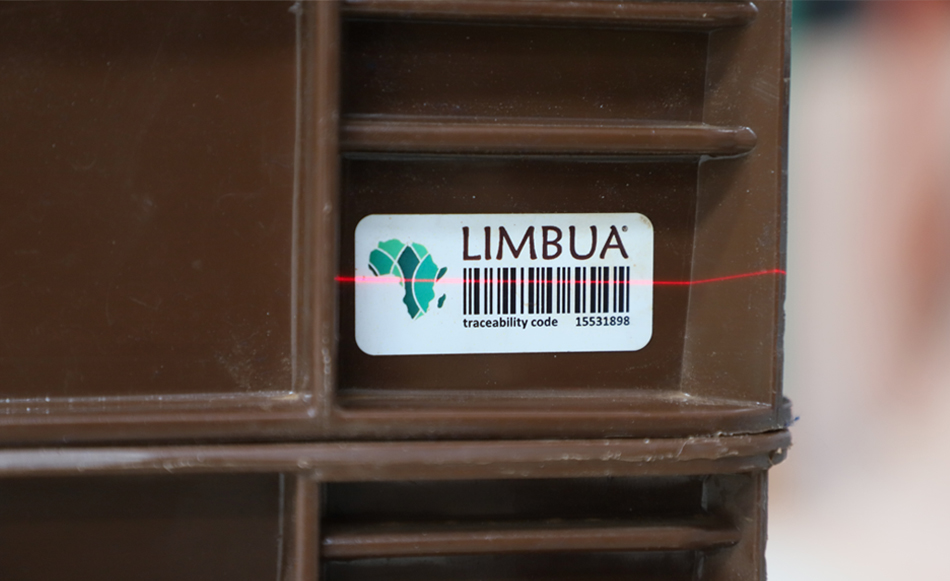
Traceability is a key element of LIMBUA’s digital solutions
Did working on the company profile give you new perspectives on organic agriculture and smallholder structures?
M. Maurer: "Working on this project showed me how closely topics such as soil care, agricultural advisory services, organic farming, and economic conditions are interconnected."
And on a personal level – what do you take away from your work with LIMBUA?
M. Maurer: "Conscious living is a real challenge and an ongoing process in our industrial consumer society. Companies and projects like LIMBUA motivate me to continue reflecting on these topics. Personally, I feel connected to nature, have an interest in woodworking, and value minimally processed foods. Respectful interaction is also very important to me.
What I particularly appreciated about LIMBUA was the attention to detail that creates a coherent overall picture. I am also impressed by seemingly simple and pragmatic solutions that reflect understanding and communication – and especially by the encouragement of individual responsibility and room for initiative."
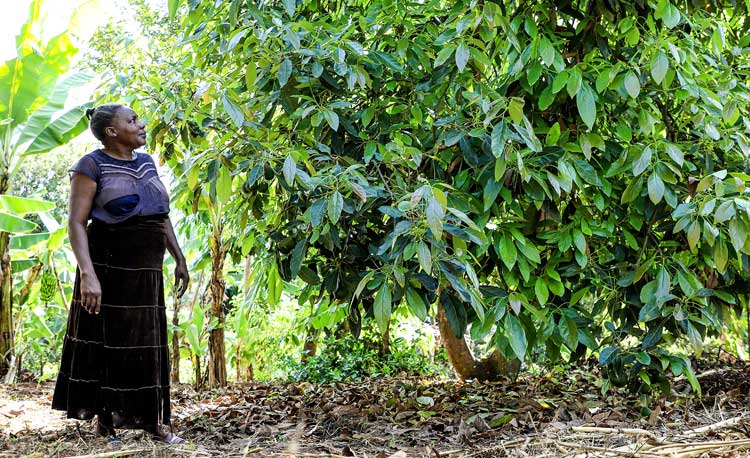
Organic farming and cooperation with smallholder farmers
About the German Journalism Academy (DJA)
The German Journalism Academy offers practical, part-time programs and advanced courses, including a focus on business journalism. It is aimed at professionals, career changers, and experienced journalists who want to further develop and certify their journalistic skills.
More information: www.deutschejournalistenakademie.de


