


Direct exchange on the ground
The Embu ASK Show brings together a broad audience: smallholder farmers from the region, local traders, schools, NGOs, county representatives and companies. This reflects the role of the Agricultural Society of Kenya, which organizes these shows as nationwide platforms for agricultural exchange and market access across multiple locations each year.
The KALRO Open Week follows a different approach. Here, the focus is on technical exchange around farming practices, research and practical solutions. KALRO uses these events to share innovations and agronomic knowledge with farmers and other stakeholders in the agricultural sector.
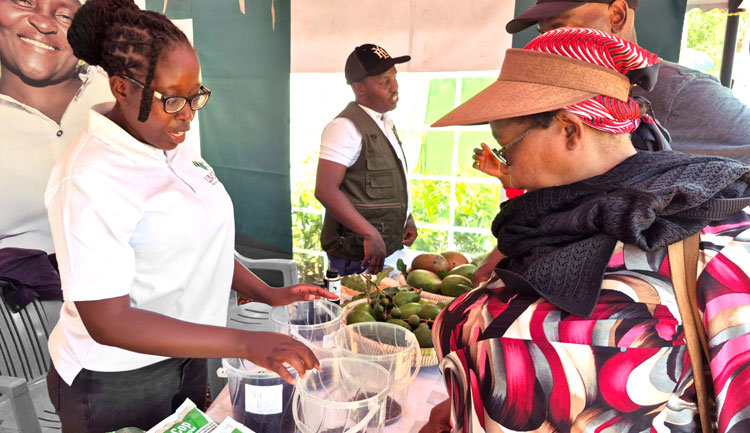
Exchange at the Embu ASK Show around organic compost and its use in everyday farming
For us, this combination was especially valuable: while the ASK Show opens the door to many initial conversations with a wide audience, the KALRO Open Week creates space for more in-depth discussions and technical questions.
Practical knowledge from the field
A key role at both events was played by our LIMBUA Field Team – colleagues who work directly with our organic farmers on a daily basis.
With more than 80 team members, they connect LIMBUA with over 9,000 contracted smallholder farmers at the foothills of Mount Kenya. They support organic farming practices, provide guidance on farm management, and help with the implementation of social and environmental standards.
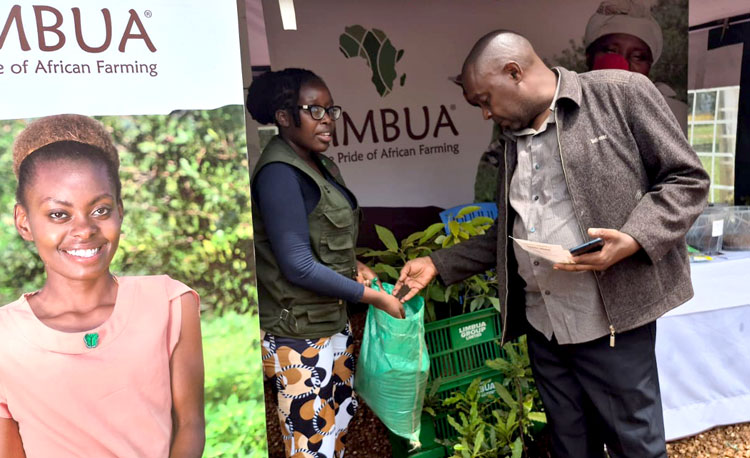
Julia Emma Kendi presenting frass derived from insect-based recycling of organic waste as an organic fertilizer
This is why conversations at the stands were highly practical. Our field officers know the realities on the farms and the challenges farmers face every day. Discussions focused on planting, farm management, compost use and organic requirements – but also on how smallholders can join LIMBUA as certified organic contract farmers.
From demonstrations to farm-level application
At our stands, it was not only our products – such as macadamia nuts, dried mango and avocado oil – that attracted attention, but also the questions behind them: how they are grown and processed.
The demonstrations by our LIMBUA teams drew particularly strong interest. Grafted tree seedlings, compost production and our approach to waste recycling were among the most discussed topics. These practical demonstrations resonated with visitors because they showed how organic farming practices can be applied in everyday farm work. This was complemented by the presentation of organic inputs suitable for certified organic farming.
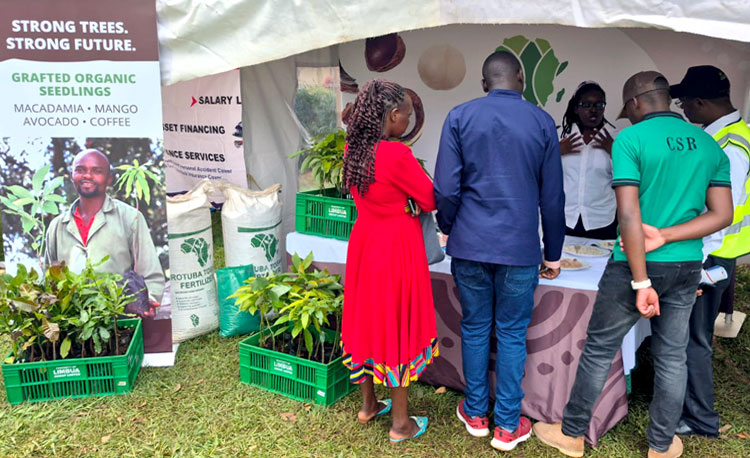
At the KALRO Open Week, grafted seedlings were presented as a basis for long-term farm planning
Our seedlings are produced in our own Ecocert-certified nursery in Kathangari. LIMBUA propagates grafted macadamia, mango, avocado and coffee seedlings, with more than 480,000 organic seedlings produced to date (2026). The aim is to provide planting material that is selected for local conditions and intended for long-term cultivation.
Rotuba Tosha compost was another key topic for many visitors. It is produced from organic by-products of avocado, mango and macadamia processing. The result is an organic fertilizer that is used for organic fertilization and can support humus formation and water retention in the soil.
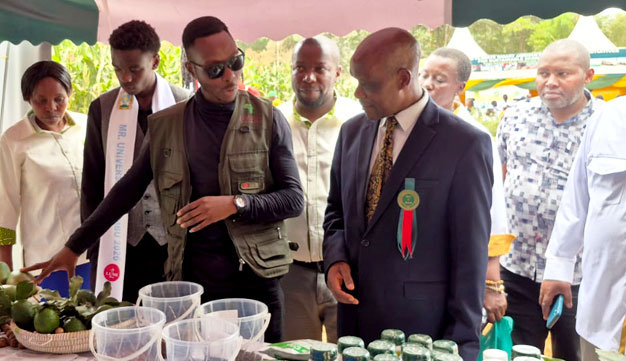
Morris Mwenda Njeru in discussion with visitors about organic mango and its processing
Visitors were also introduced to the Omnivore project. In this system, organic production residues are processed using insect larvae. The aim is to develop protein-rich animal feed and organic fertilizer and to integrate organic residues more strongly into agricultural cycles. Many visitors found this approach particularly interesting.
The exchange continues beyond the event
These events once again showed how important direct exchange with people on the ground is. The conversations were closely connected to the realities of farming. For us, such events go far beyond a traditional trade fair presence. They create a low-threshold space where smallholder farmers and other interested visitors can ask questions and engage directly with us.
This personal interaction is essential. It allows us to listen, better understand real needs and show what collaboration with LIMBUA can look like in practice.
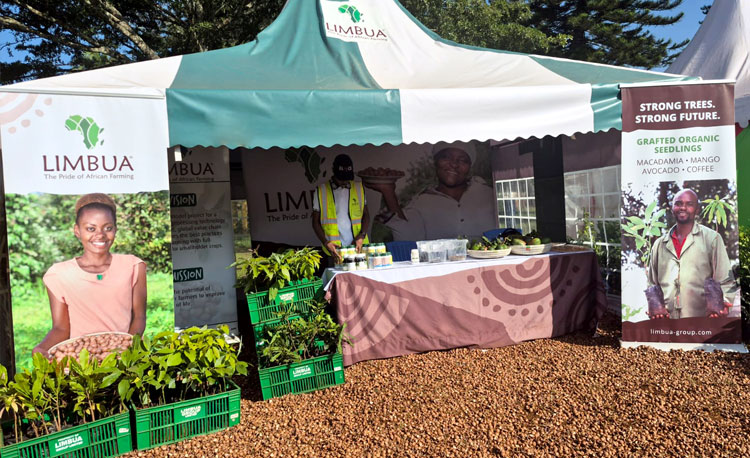
LIMBUA at the ASK Show – literally standing on macadamia shells


