


CHIPUKIZI MAZINGIRA FANS: Environmentalists in Action
The LIMBUA Foundation addresses this challenge through its initiative CHIPUKIZI MAZINGIRA FANS. Together with 37 partner schools, we involve students in an environmental project that combines awareness with practical solutions. Many of these students are children of our contract farmers. As part of the project, they collect non-biodegradable waste and bring it to their schools, where LIMBUA organizes proper disposal. Through this hands-on approach, students learn how recycling and environmental protection are connected.
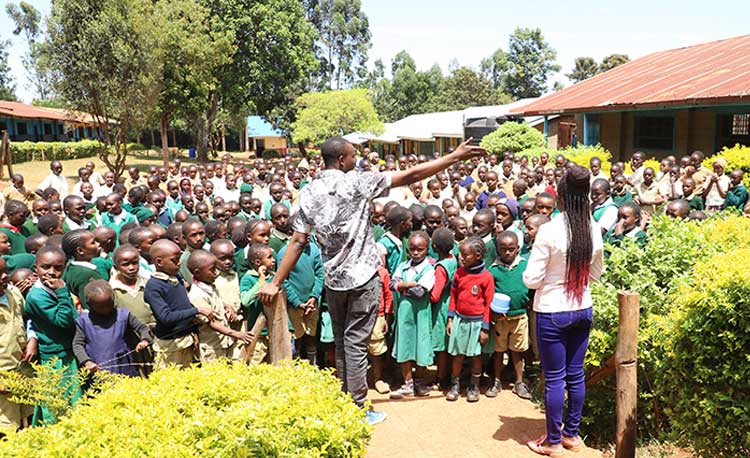
Students at one of the participating partner schools receive an introduction to the waste collection project
The project name is no coincidence: CHIPUKIZI MAZINGIRA FANS is made up of Swahili words. CHIPUKIZI means “to sprout” or “grow,” MAZINGIRA means “environment,” and FANS symbolizes the community of supporters. The name therefore describes a young generation actively engaging with environmental and recycling topics.
The Waste Management Challenge in Rural Kenya
In rural regions, there is no organized municipal waste collection system. Instead, alternative waste disposal approaches exist: while the tea and coffee industries provide collection points for recyclable materials and traders resell valuable resources, non-biodegradable waste remains a challenge. LIMBUA is working to close this gap through CHIPUKIZI MAZINGIRA FANS by offering a solution that is both practical and designed for long-term implementation. The goal goes beyond simply collecting waste – it is also about creating long-term awareness around waste separation and recycling.
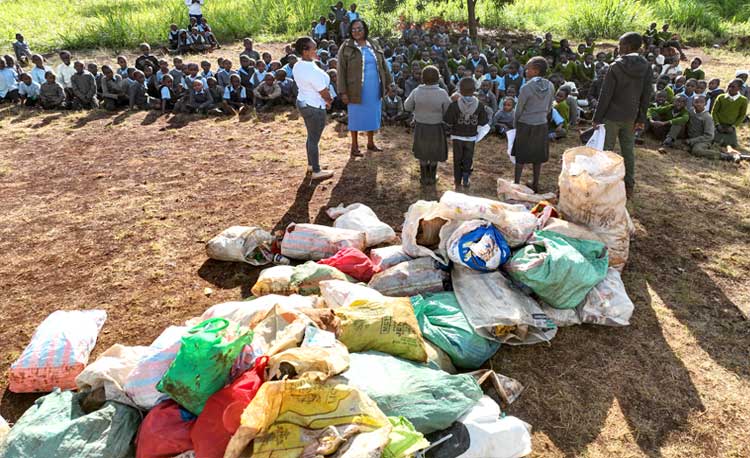
Quite a pile: non-biodegradable waste collected and ready for pickup by LIMBUA
The Goal: Strengthening Awareness for Waste Management and Recycling
Plastic and polythene residues can affect soil quality and pollute water sources over time. The active involvement of schoolchildren – many of whom come from farming families – helps create awareness of a more conscious approach to waste handling from an early age. In this way, recycling and collection structures are passed on across generations.
-
Student Environmental Ambassadors: As part of the project, students collect non-biodegradable waste from their surroundings and bring it to designated collection points at their schools. On collection days, the waste is weighed, and students are actively involved in the process. The focus is on participation and engagement among the young people.
-
Organized Disposal: LIMBUA arranges the transport of the collected material and hands it over to a specialized partner for professional processing.
-
Collaboration with Local Partners: The collected waste is handled by Green Pine Agency, a recycling company. Recyclable materials are sorted and processed, while non-recyclable components are safely disposed of.
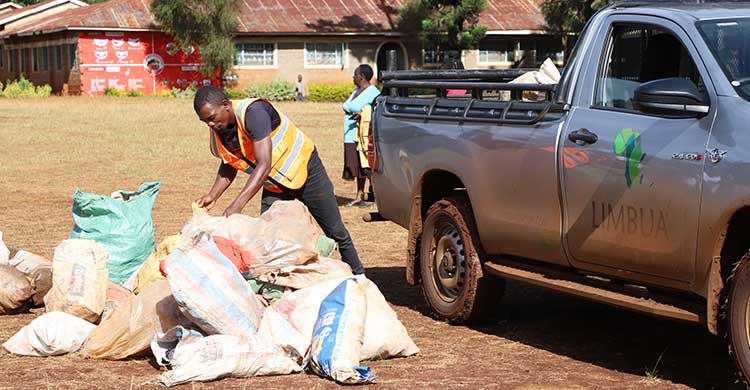
LIMBUA collects the waste from the schools and delivers it to the project partner “Green Pine Agency” for professional recycling or disposal
Project Scope & Long-Term Vision
Since the project started in February 2025, 37 partner schools have actively participated and the initiative has already shown encouraging results. Around 200 smallholder families benefit directly from the project. Initial feedback has been very positive – students show strong engagement and look forward to the collection days. Their motivation demonstrates that the project works not only on a practical level, but also influences awareness among the students.
In the future, the program is expected to expand further in order to involve more schools and families. The goal is to establish a long-term structure for collecting and recycling non-biodegradable materials that extends beyond local initiatives and can serve as a model for similar projects.
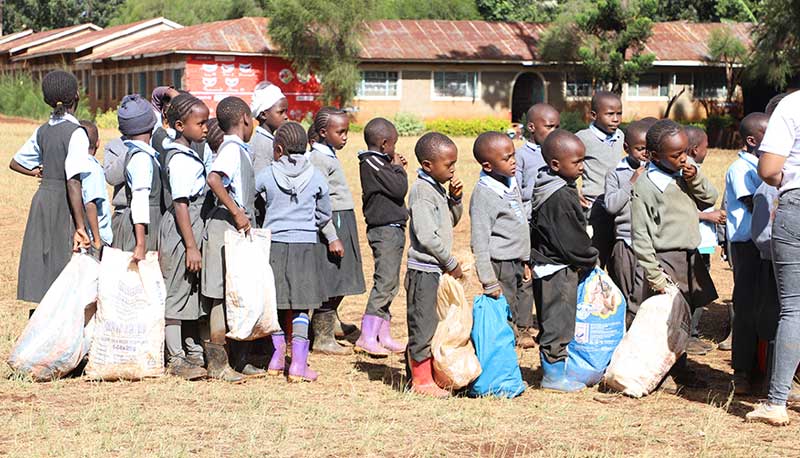
Excitement is high: the collected material is weighed
Impact on Schools and Communities
The project not only affects how waste is handled locally, but also strengthens community ties and supports long-term regional development:
-
Education as a Key to Change: Students learn from an early age about the importance of responsible resource use – knowledge they carry into their families and communities.
-
Long-Term Waste Structures Instead of Short-Term Solutions: By integrating collected waste into an organized disposal system, the project creates a structure that extends beyond individual actions.
-
Collective Engagement: The initiative connects students, schools, and farming communities to work together on long-term solutions.
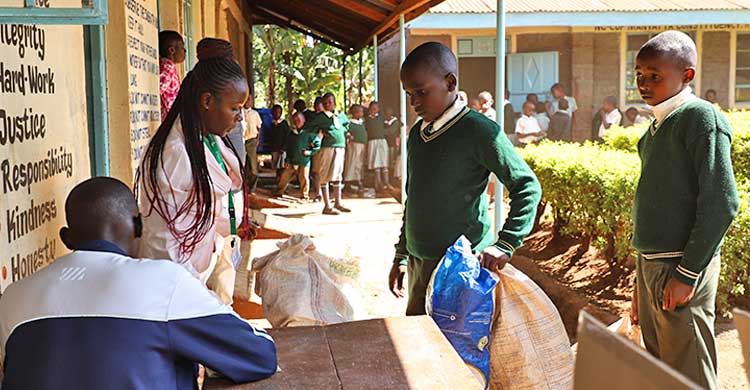
Students at a participating primary school bring collected waste for weighing
Personal Perspectives
The project is managed by two dedicated LIMBUA employees as part of the LIMBUA Foundation. Through close cooperation with schools, teachers, and communities, they help ensure that the project not only functions well, but can also continue in the long term.
Our LIMBUA Demeter & Special Projects Manager oversees the project and its integration into LIMBUA’s environmental and recycling activities. “This initiative not only contributes to a cleaner environment, but also strengthens awareness around the value of recycling and resource use,” he explains.
Our LIMBUA Field Admin coordinates the collection activities, organizes communication with the schools, and supports the project implementation. “It is inspiring to see how engaged the students are. The enthusiasm with which they collect and bring materials to school shows how actively they participate in the project,” she says.
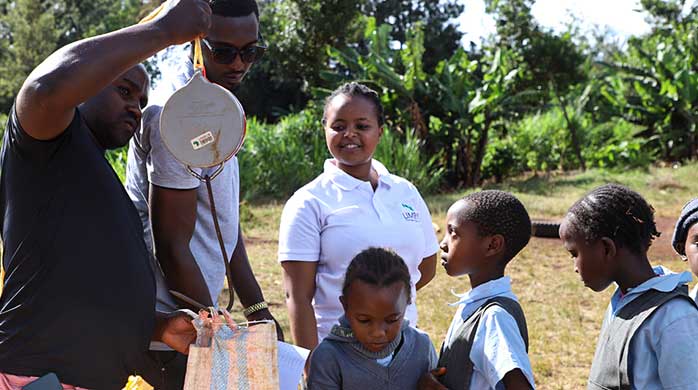
Bilha Wanjira (center) is one of the project coordinators supporting the engaged young environmentalists
Young Environmentalists: Next Steps and Long-Term Goals
LIMBUA plans to further expand the project and involve additional schools and smallholder farming families. The aim is to strengthen awareness around waste management and recycling within the communities and establish a long-term structure for collecting and professionally recycling non-biodegradable materials. Additional partnerships with local recycling companies and environmental initiatives are also conceivable in order to further improve the project structures.
Through its close collaboration with schools, CHIPUKIZI MAZINGIRA FANS contributes to organized waste management structures – another step toward improving the handling of non-biodegradable waste.
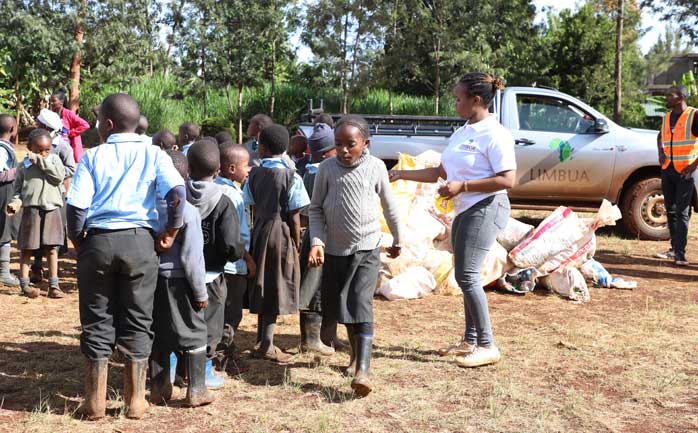
Collected material from a collection day at one of the LIMBUA partner schools is prepared for transport


