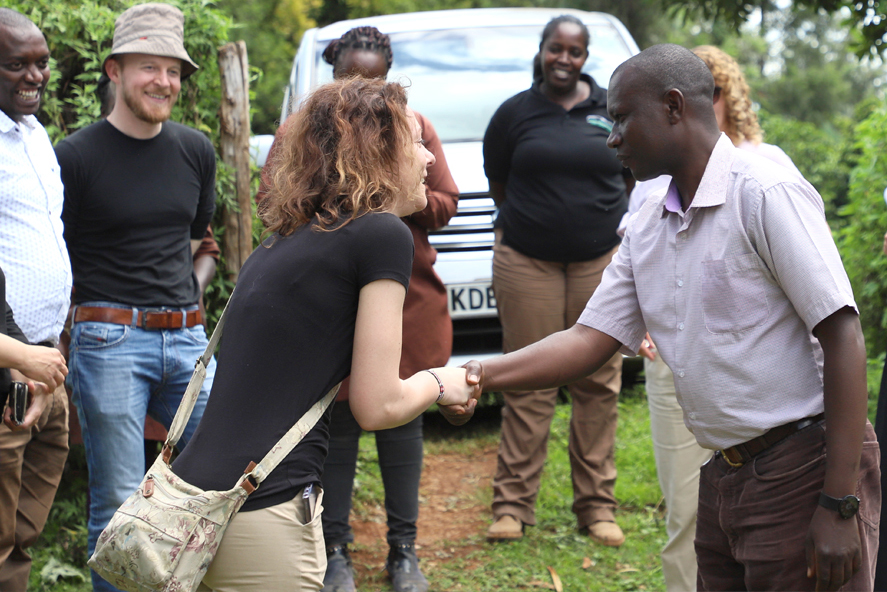
In June 2023, members of the German LIMBUA team travelled to Kenya to meet their colleagues and gain insight into the different stages of the LIMBUA value chain.
Where macadamia trees begin
Visiting the LIMBUA sites around Mount Kenya gave the German team an opportunity to experience areas of the business that they had previously known mainly through digital communication.
The visit began at the tree nursery in Kathangari. Here, Kenyan employees grow macadamia, avocado and mango seedlings before distributing them to contract smallholder farmers. Defined propagation, grafting and plant care methods are used during this process.
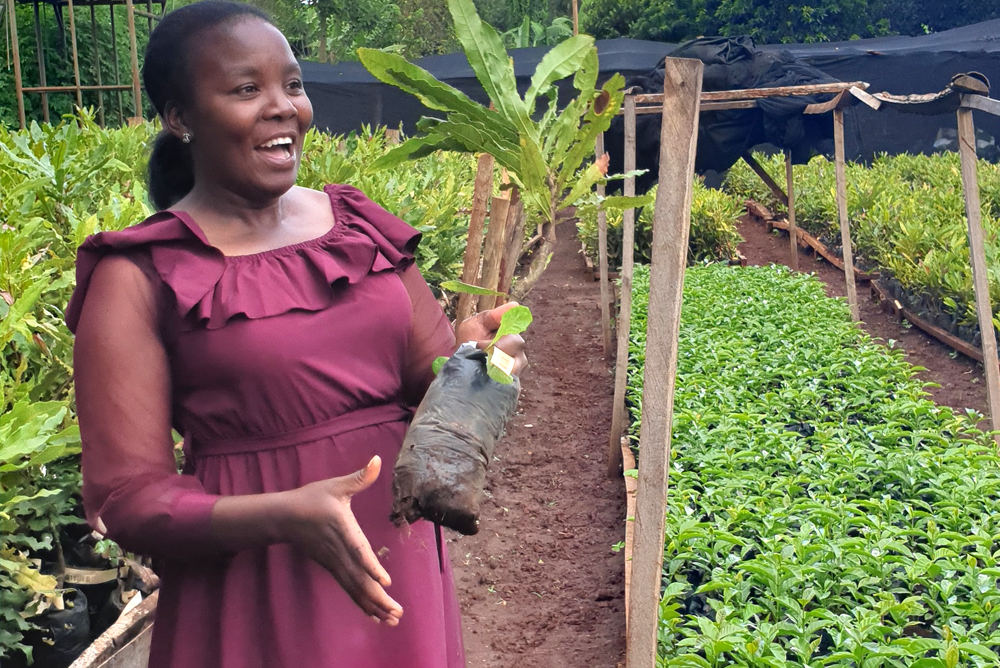
Nursery Manager Regina Rwamba explains the development of a macadamia seedling
The nursery team explained the different tree species, varieties and grafting methods to their German colleagues. They also discussed how the seedlings are later used on the organic mixed farms of contract smallholder farmers. By the time of the visit, more than 200,000 organic seedlings had been produced in the LIMBUA tree nurseries.
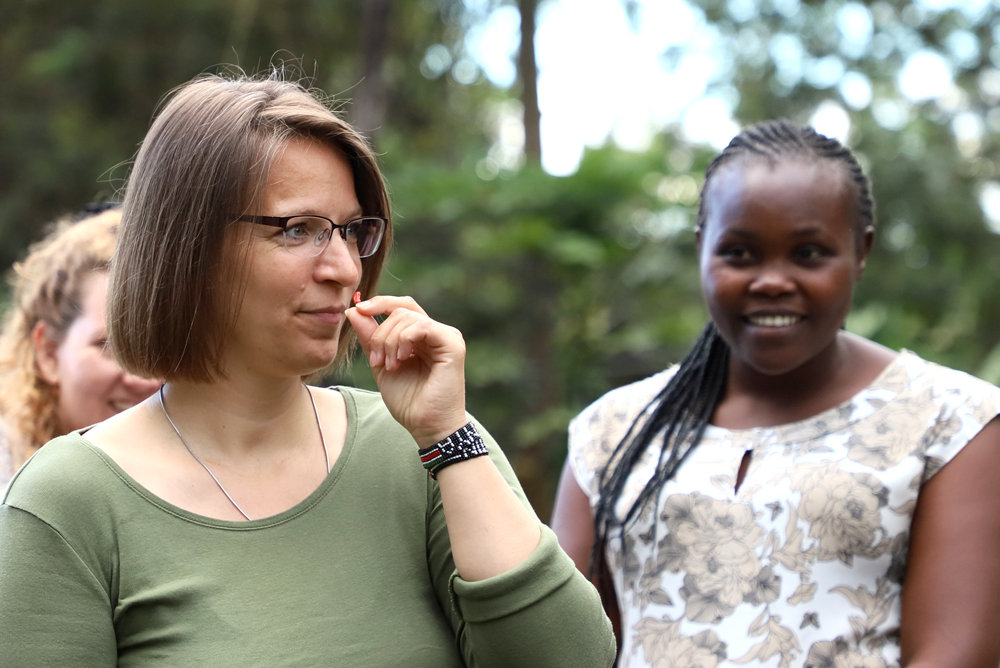
Insights into the work of the LIMBUA tree nursery
The organic mixed farm
The programme also included visits to several contract smallholder farmers and their organic mixed farms around the LIMBUA sites. The farmers took time to show the team the different crops and agricultural activities on their farms. The visitors were also able to taste jackfruit, bananas and avocados directly on the farms.
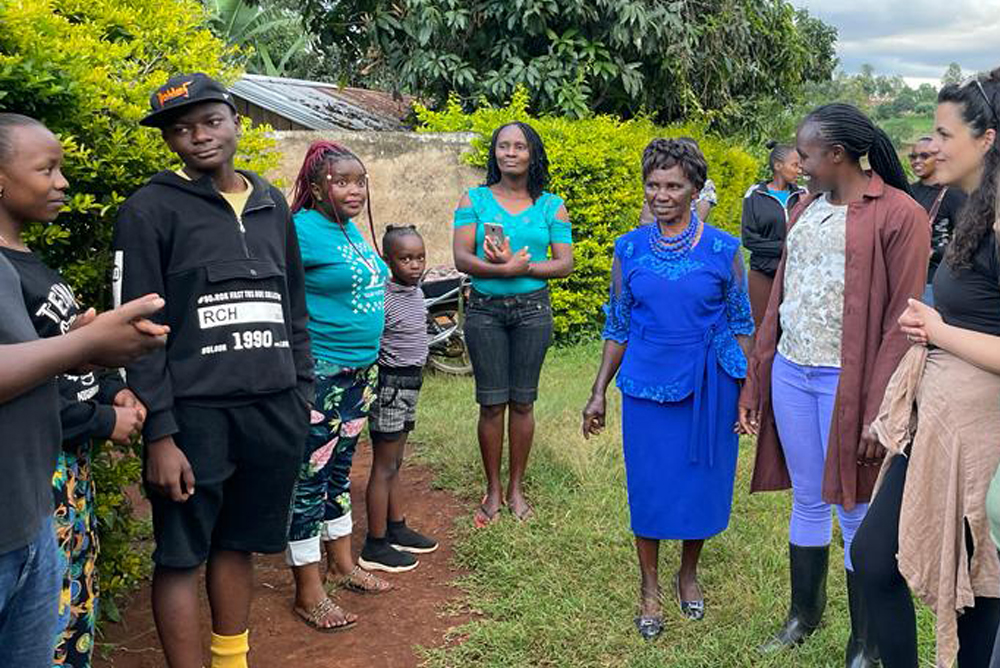
LIMBUA contract smallholder farmer with her family
On a mixed farm, different plant species are grown on the same agricultural land. Unlike a monoculture, this farming system combines trees, shrubs, field crops and other useful plants with different growth patterns and harvesting seasons.
Animals such as chickens, goats and cattle may also be part of these farms. Their manure can be used as a raw material for organic fertiliser. Combining different crops and animals enables smallholder farmers to produce a range of products for their own consumption and for sale.
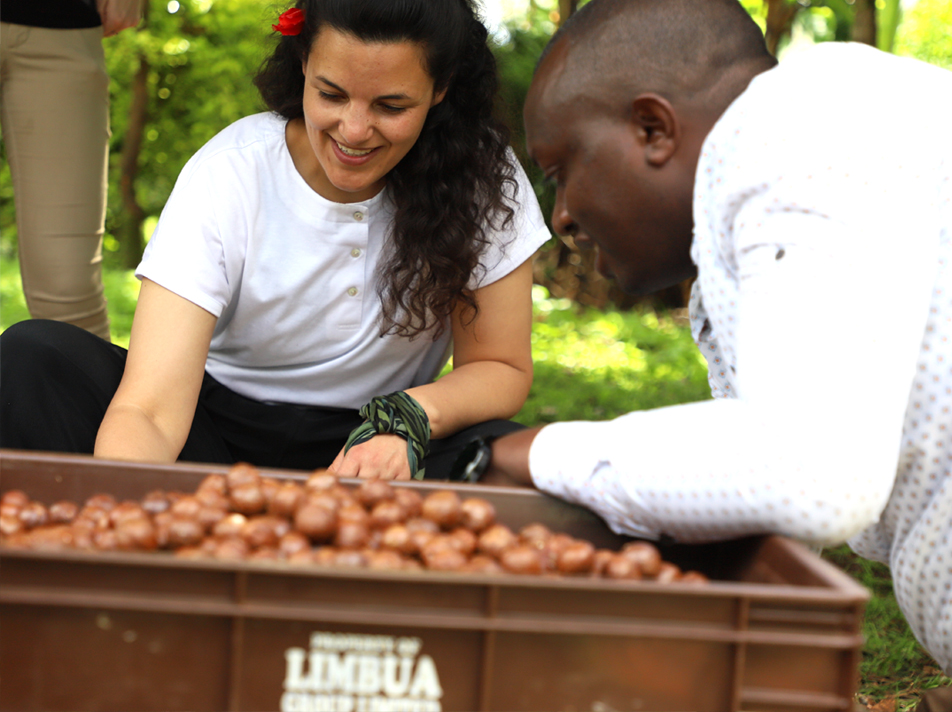
Learning about the macadamia harvest on an organic mixed farm
The German team gained insight into the everyday work of the contract smallholder farmers. This included taking part in the macadamia and avocado harvests as well as observing the purchasing process. Under the guidance of their Kenyan colleagues, the team also removed the green outer husks from macadamia nuts and supported the initial sorting process.
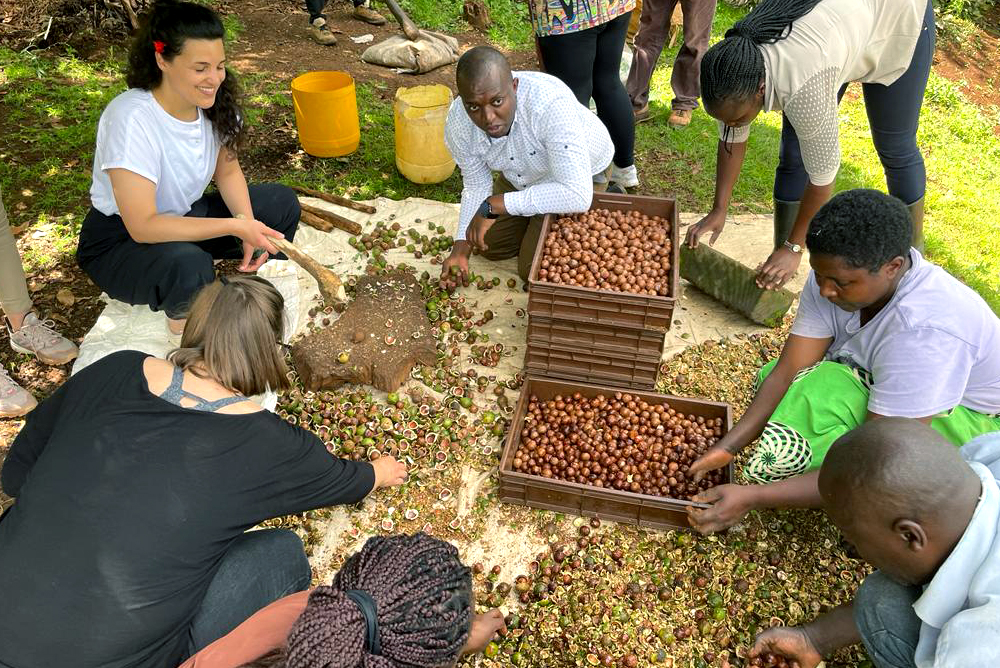
Removing green macadamia husks together on the farm
Taking part in processing
Another part of the programme was a visit to the LIMBUA production facilities in Ena and Kianyaga. The German team was able to observe the individual processing steps for macadamia nuts directly. These include drying, cracking, inspecting and sorting the nuts according to defined quality criteria.
Trying to crack macadamia nuts themselves demonstrated how much experience this step requires. Considerable force may be needed to open the hard macadamia shell while keeping the kernel inside as intact as possible. Manual sorting also requires careful assessment of each individual kernel.
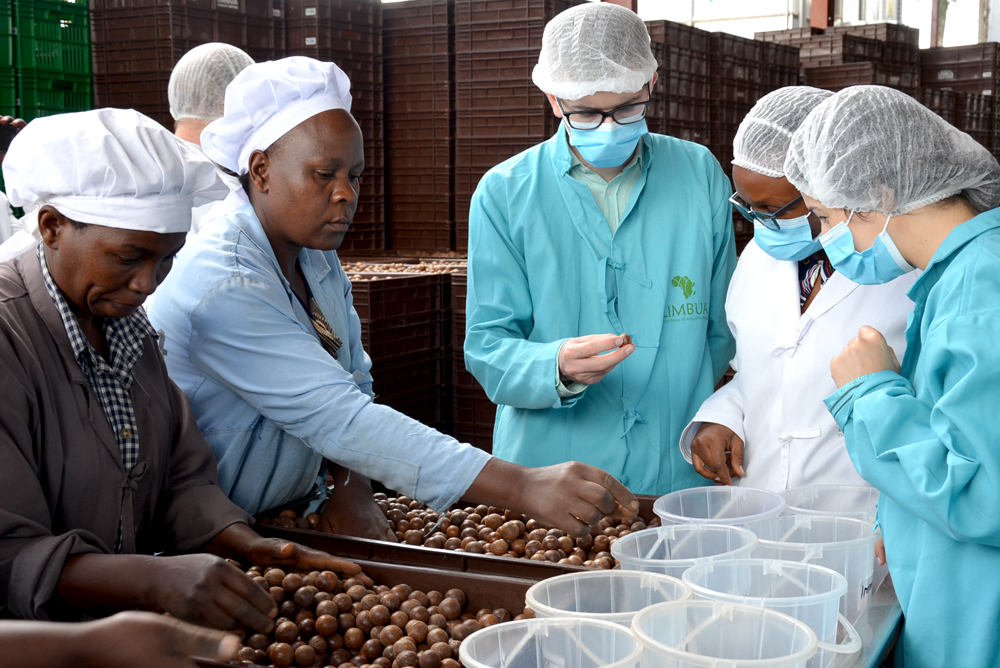
Manual sorting of macadamia kernels
The visit also included packing and loading and unloading containers in the logistics department. This gave the team a direct impression of the manual and organisational tasks carried out at the LIMBUA production facilities in Kenya.
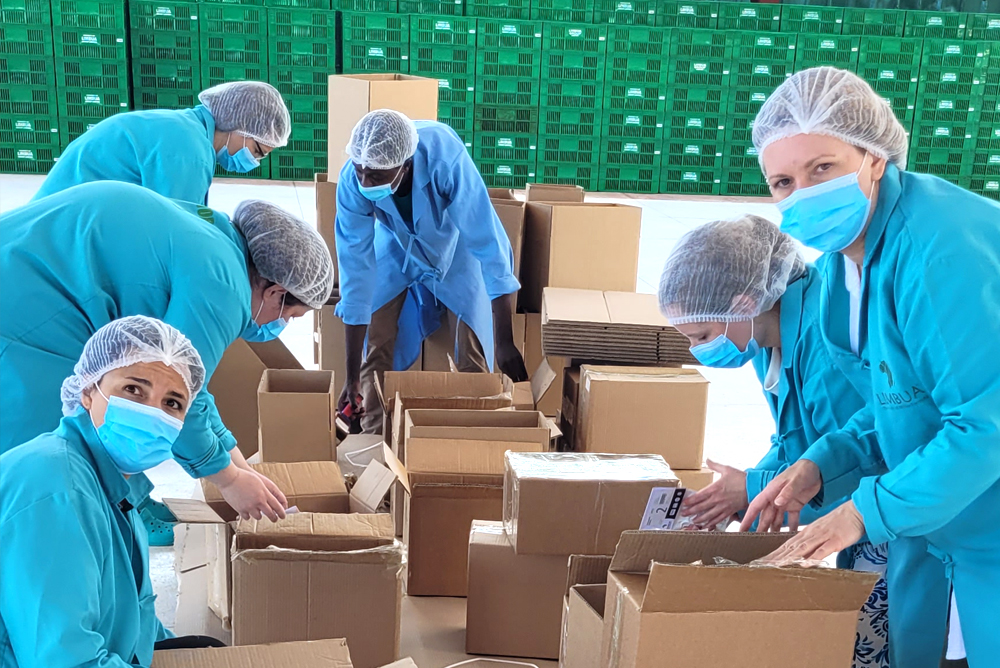
Working in LIMBUA logistics
Composting production residues
The German team also helped process organic compost using a mechanical compost turner. During composting, organic residues from macadamia, mango and avocado processing are broken down under controlled conditions. The finished compost adds organic matter and nutrients to the soil.
Through composting, avocado stones and other plant-based production residues are used as raw materials for an agricultural input. The compost produced by LIMBUA is provided to contract smallholder farmers for use on their organic mixed farms.
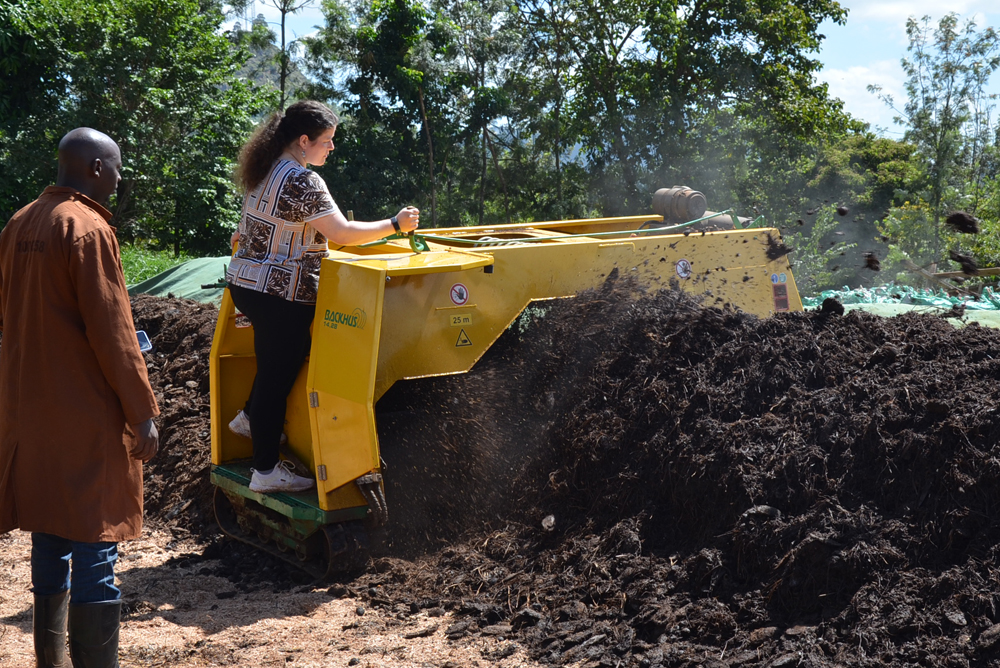
Turning organic compost with a compost turner
Personal exchange between the teams
In addition to learning about the agricultural and operational processes, meeting the teams in person was a central part of the visit. Away from their regular online meetings, the German and Kenyan employees were able to exchange information directly about their responsibilities, goals and experiences.
The discussions illustrated how the different areas of work are connected, from organic cultivation on mixed farms and direct purchasing of harvests to processing and export. Personal exchange also supports coordination between the teams in Kenya and Germany.
Thank you to all the team members involved for organising the visit, sharing their knowledge and providing insights into their areas of work.